

Why High-Achieving Black Women Struggle to Ask for Help
You're the one people call to get things done (you might be a Virgo…jk…or am I?)! When something goes wrong at work, at home, or in the family group chat, you're the one who handles it. You show up, you figure it out, AND you make it look easy.
When was the last time someone took care of you, though?
If you're a high-achieving Black woman, there's a good chance asking for help feels harder than doing it all yourself. Maybe you've been called "the strong one" so many times that it stopped feeling like a compliment and started feeling like a job description. Somewhere along the way, strong Black woman burnout crept in. This might look like exhaustion that sleep doesn't fix, irritability you hide, the sense that if you stop holding everything up, it will all fall apart.
You're not imagining it, and I promise you're not failing at life. Let's talk about why asking for help is so hard, and what it can look like to start putting some of the weight down.
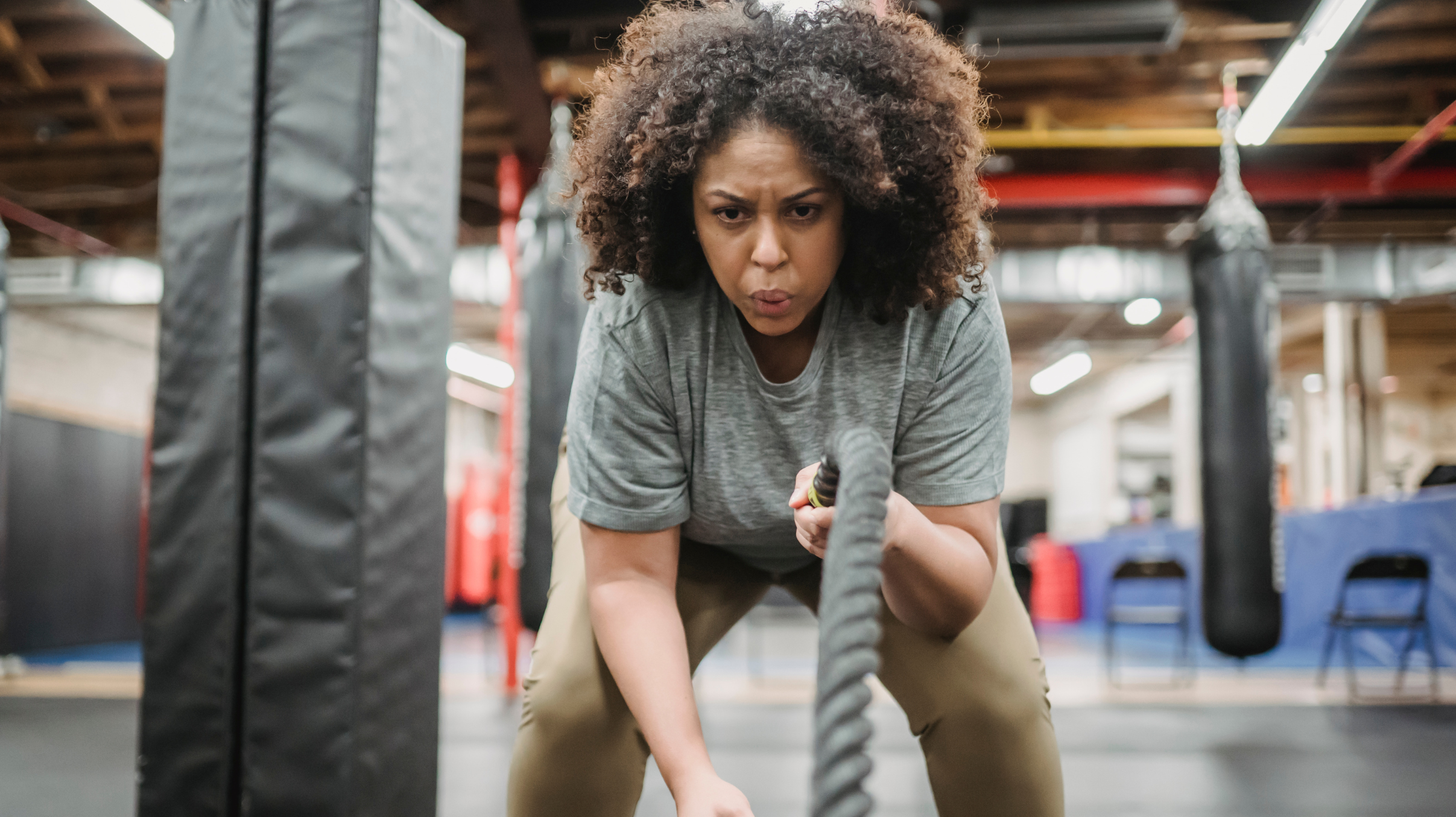
Strong Black Woman Burnout: When Strength Stops Being a Choice
Researcher Dr. Cheryl Woods-Giscombé studied what she called the Superwoman Schema: the pressure many Black women feel to present an image of strength, suppress emotions, resist vulnerability, succeed despite limited resources, and prioritize caring for others. Her research connected this pattern to stress and its toll on health.
That strength often started as a non-negotiable. It's how our mothers and grandmothers survived, but what we know about strength that never gets to rest, is that it eventually stops being strength and becomes survival.
Strong Black woman burnout is what happens when being the dependable one is no longer a choice you make, and becomes who everyone expects you to be, including you.
Why Asking for Help Feels So Hard
You went first, with no roadmap. Maybe you were the first in your family to go to college, build a different kind of career, move away, or wait on marriage and kids. When you go first, everyone is watching. Struggling can feel like proof that you shouldn't have chosen differently, so you keep it to yourself.
You learned early that needing help was risky. For many of us, self-reliance was a lesson taught out of survival and protection: don't put your business in the street, handle it at home, don't let them see you sweat. Those lessons protected us and they taught us that needing help is a weakness.
The world asks you to prove yourself twice. At work, in school, and in public spaces, many Black and Brown women feel they can't afford to be seen struggling. Public health researcher Dr. Arline Geronimus calls the long-term wear of this chronic stress weathering. It isn't one hard day. It's years of code-switching, staying on guard, and carrying more than your share.
Your nervous system learned that self-reliance keeps you safe. When being strong kept you connected, praised, or protected, your body learned to treat needing help as a threat. That's why "just ask for help" can feel physically uncomfortable: a tight chest, a lump in your throat, an urge to say "I'm fine" before you've even thought about it. Those are the protective patterns your body learned for good reasons.
Signs You're Carrying Too Much
Strong Black woman burnout doesn't always look like falling apart. Often it looks like functioning well on the outside while running on empty inside. You might notice:
Saying yes when you mean no, then feeling resentful
Feeling guilty when you rest or put yourself first
Being exhausted no matter how much you sleep
Tension in your jaw, shoulders, or stomach that never fully goes away
Feeling like no one would know what to do without you
Struggling to remember the last time someone took care of you
If several of these feel familiar, your body may be telling you what your schedule won't let you hear.
What Asking for Help Can Look Like
Asking for help doesn't have to start with a big conversation. For someone who has been the strong one for years, small steps count.
Notice the "I'm fine" reflex. The next time someone offers help, pause before you answer. What does your body do? You don't have to change anything yet. Just notice.
Let one thing go. Choose one task this week that someone else can handle, even if they won't do it exactly the way you would.
Tell one person the truth. Pick someone safe and say, "I've been carrying a lot lately." You don't have to explain everything.
Practice receiving. When someone offers to help, try saying "thank you" instead of "I've got it."
These steps may feel awkward at first. That discomfort isn't a sign you're doing it wrong. It's what change feels like to a nervous system that learned to do it alone.
How Therapy Can Help (Without Asking You to Explain Your Culture)
Many women I work with have tried therapy before and felt unseen. Their therapist missed the weight of family loyalty or treated their exhaustion as a time-management problem. By the time they get to me, they’re wondering, "Will this time be different?"
Therapy with someone who understands where you come from can feel different. You won't have to explain why family comes first, why saying no feels like betrayal, or why "just rest" isn't that simple.
At Healing Her Confidence Counseling, PLLC, I use a body-based approach, drawing on Somatic Experiencing and Cognitive Behavioral Therapy (CBT), to help you understand why it's been so hard to put the weight down, not just hand you more coping tips. I offer virtual therapy for women anywhere in Texas, with private pay sessions that leave room to go deeper. Learn more about Therapy for Black Women in Texas.
Frequently Asked Questions
What is strong Black woman burnout?
It's the emotional and physical exhaustion that can come from constantly being the strong, dependable one, often while suppressing your own needs. It may show up as fatigue, irritability, anxiety, guilt around rest, or physical tension.
Why do Black women struggle to ask for help?
Many Black women learned early that self-reliance was necessary for safety and success. Cultural expectations of strength, being the first in the family to choose differently, and the chronic stress of racism can all make needing help feel risky.
Is therapy worth trying if it didn't work before?
Yes, it can be. A past experience often reflects a poor fit, not a lack of readiness. A culturally responsive therapist who understands family loyalty and the pressure to be strong can make the experience feel very different.
You Don't Have to Keep Carrying It Alone
If you're in Texas and ready to stop being the only one holding everything up, I'd love to talk. Your first step is a free, no-pressure 20-minute consultation.
If you're in crisis or thinking about harming yourself, please call or text 988 to reach the Suicide & Crisis Lifeline. If you're in immediate danger, call 911.
